
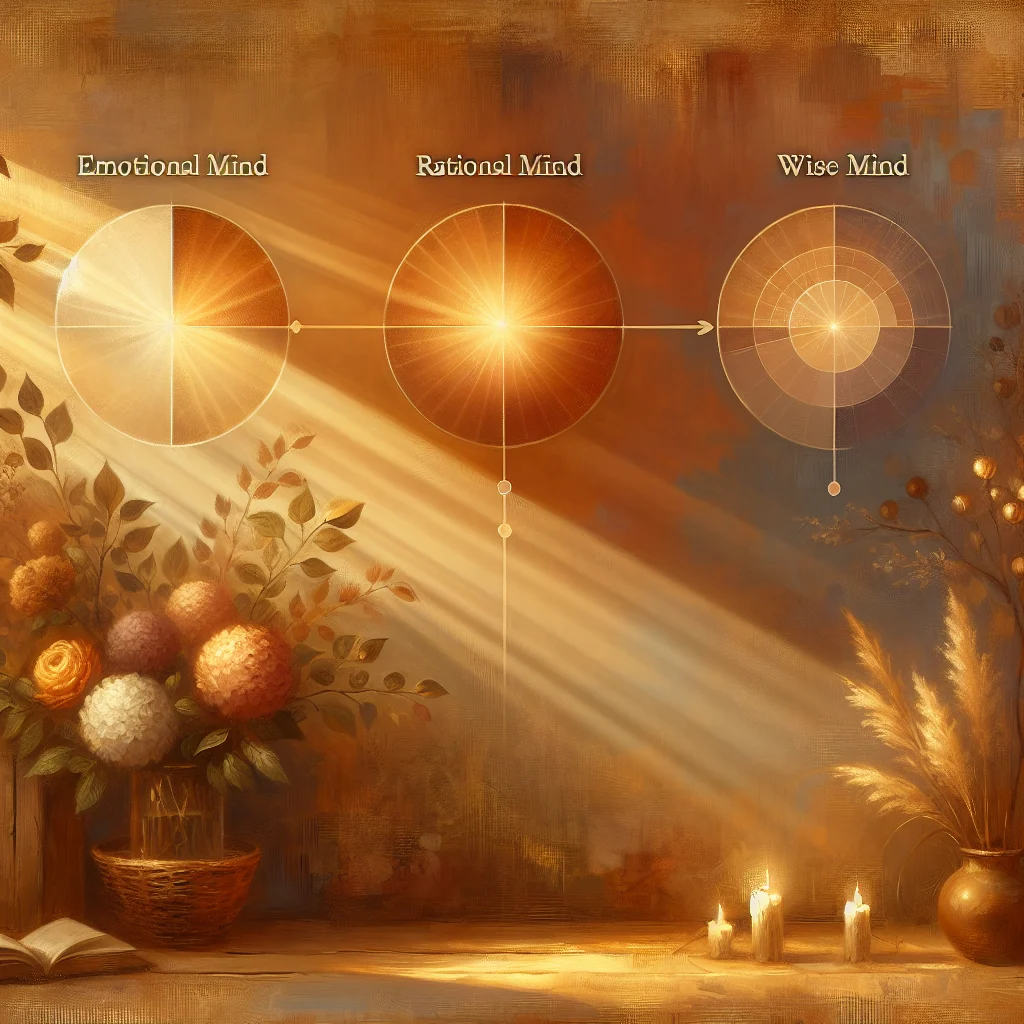
Understanding the concept of emotional rational wise mind can transform how you navigate life’s challenges and make decisions. Developed by psychologist Marsha Linehan as part of Dialectical Behavior Therapy (DBT), this framework helps us recognize three distinct states of mind that influence our thoughts, feelings, and actions. Learning to identify and cultivate your wise mind can lead to more balanced decision-making and emotional well-being.
The wise mind represents the intersection where logic and emotion meet, creating a state of inner wisdom that honors both our feelings and our rational thoughts. However, understanding this concept is easier said than done, especially when we’re caught in the grip of intense emotions or stuck in rigid analytical thinking.
In this comprehensive guide, we’ll explore what the emotional mind, rational mind, and wise mind are, how to recognize which state you’re in, and practical techniques to access your wise mind when you need it most. Whether you’re dealing with stress, anxiety, or simply want to make better life choices, developing your wise mind can be a game-changer.
For those interested in deepening their mindfulness practice alongside this work, consider checking out Everyday Calm: A Beginner’s Guide to Daily Meditation, which provides practical tools for cultivating inner awareness.
What Is the Emotional Mind?
The emotional mind is the state where feelings dominate our thinking and behavior. When we’re in emotional mind, our decisions are driven primarily by how we feel in the moment rather than by logic or long-term consequences. This isn’t inherently bad—emotions provide valuable information about our needs, values, and responses to situations.
Nevertheless, operating solely from emotional mind can lead to impulsive decisions we later regret. For example, sending an angry text message at 2 AM or making a major life decision while feeling overwhelmed typically comes from this state. The emotional mind is characterized by intensity, urgency, and a sense that feelings represent absolute truth.
Signs You’re in Emotional Mind
- Your feelings seem like undeniable facts
- You experience intense urges to act immediately
- Logic and reasoning seem irrelevant or unimportant
- You have difficulty seeing other perspectives
- Your thinking feels black-and-white or extreme
- Physical sensations associated with emotions feel overwhelming
While the emotional mind serves important functions—particularly in recognizing danger, connecting with others, and experiencing joy—it’s not equipped to handle all situations effectively. Therefore, understanding when you’re in this state is crucial for making balanced decisions.
Understanding the Rational Mind
On the opposite end of the spectrum lies the rational mind, where logic, facts, and analytical thinking dominate. When operating from rational mind, we focus on data, reason, and practical considerations while minimizing or dismissing emotional input. This state is valuable for problem-solving, planning, and analyzing complex information.
However, relying exclusively on rational mind can lead to decisions that feel cold or disconnected from our values and needs. For instance, staying in a job solely because it makes financial sense while ignoring that it makes you miserable represents pure rational mind thinking. Similarly, dismissing someone’s feelings as “illogical” comes from this state.
Characteristics of Rational Mind
- Prioritizing facts and data over feelings
- Viewing emotions as irrelevant or problematic
- Making decisions based purely on pros and cons lists
- Struggling to understand or validate others’ emotional experiences
- Feeling disconnected from your own feelings and values
- Approaching relationships like problems to be solved
According to Dialectical Behavior Therapy principles, neither emotional mind nor rational mind alone provides complete guidance for living effectively. Instead, we need to integrate both perspectives to access wisdom.
The Wise Mind: Where Emotion and Reason Meet
The wise mind represents the synthesis of emotional and rational thinking. In this state, you can acknowledge your feelings while also considering facts and consequences. Wise mind decisions feel right both intellectually and emotionally—they have a quality of inner knowing that transcends pure logic or pure emotion.
Accessing your wise mind doesn’t mean compromising or finding a middle ground between emotion and reason. Rather, it means integrating both to access a deeper wisdom that considers your whole self. Because of this integration, wise mind decisions tend to align with your values and long-term wellbeing.
For example, deciding to end a relationship might involve acknowledging both your emotional pain (emotional mind) and recognizing incompatible life goals (rational mind), while your wise mind provides the clarity that leaving is the right choice despite the difficulty.
Signs You’re in Wise Mind
- Decisions feel right both emotionally and logically
- You experience a sense of calm clarity
- You can consider multiple perspectives simultaneously
- Actions align with your deepest values
- You feel centered and grounded
- Intuition and reason work together rather than conflict
Developing your capacity to access wise mind is central to many approaches in mental health and wellbeing. Additionally, it’s a skill that improves with practice rather than something you either have or don’t have.
Why the Wise Mind Matters for Mental Health
Understanding and cultivating your emotional rational wise mind has profound implications for mental health. Research in dialectical behavior therapy shows that people who can access their wise mind experience less emotional volatility, make more effective decisions, and have better relationships.
The wise mind is particularly valuable when dealing with conditions like anxiety and depression. For instance, anxiety often involves emotional mind catastrophizing while depression may involve rational mind rumination. Consequently, accessing wise mind can interrupt these patterns and provide a more balanced perspective.
Furthermore, the wise mind concept relates closely to emotional regulation. When you can recognize which state you’re in, you gain the power to shift states rather than being controlled by them. This awareness is fundamental to nervous system and emotional healing.
The Connection to Burnout and Stress
Burnout often results from being stuck in rational mind—ignoring emotional signals that you need rest, boundaries, or change. Similarly, the stress response can lock us into emotional mind, making it difficult to think clearly about solutions. As a result, cultivating wise mind is essential for both preventing and recovering from burnout.
If you’re struggling with burnout, you might find valuable insights in our article on does burnout go away, which explores the recovery process. Moreover, building resilience through wise mind practices can prevent future episodes of overwhelm.

Practical Techniques to Access Your Wise Mind
While understanding the concept of emotional rational wise mind is important, the real value comes from learning to access this state when you need it. Fortunately, there are several evidence-based techniques you can use to cultivate wise mind awareness.
1. Mindfulness Meditation
Regular mindfulness practice is perhaps the most effective way to develop wise mind. Through meditation, you learn to observe both thoughts and feelings without being overwhelmed by them. This observational stance is the foundation of wise mind.
Start with just five minutes daily of sitting quietly and noticing your breath. As thoughts and feelings arise, simply acknowledge them without judgment. Over time, this practice strengthens your ability to witness your inner experience rather than being swept away by it.
For structured guidance, explore resources in mindfulness and meditation that can support your practice. In addition, consistency matters more than duration when building this skill.
2. The Stone Flake on the Lake Visualization
This DBT exercise helps you visualize accessing wise mind. Imagine yourself as a stone flake gently floating down through a clear lake. As you descend deeper, you move through the churning waters near the surface (emotional mind) and the cool, still depths (rational mind) until you reach the very bottom—a place of complete stillness and clarity.
Practice this visualization when you need to make an important decision or when you feel emotionally overwhelmed. The imagery helps shift your consciousness toward that centered, wise place within you.
3. Ask Wise Mind Questions
When facing a decision, explicitly consult each state of mind. First, ask: “What does my emotional mind say?” Notice the feelings that arise without judgment. Then ask: “What does my rational mind say?” Consider the facts and logical considerations.
Finally, pose the question to your wise mind: “What feels deeply right here?” The answer might come as a subtle knowing, a sense of rightness, or even a physical sensation of alignment. Because wise mind speaks more quietly than the other states, you may need to create silence to hear it.
4. Check Your Body
Wise mind often manifests as a physical sensation of centeredness or alignment. When you’re contemplating a decision, notice how each option feels in your body. Does one create tightness or resistance? Does another bring a sense of openness or ease?
Your body holds wisdom that transcends pure thought or feeling. Therefore, developing somatic awareness—the ability to tune into bodily sensations—can help you access wise mind more readily. This connects to broader work around emotional healing and how it affects the body.
5. Practice the Pause
One of the simplest yet most powerful wise mind techniques is the pause. When you notice yourself in intense emotional mind or rigid rational mind, simply pause before acting. Take three deep breaths, step away from the situation if possible, and create space for wise mind to emerge.
This pause disrupts automatic reactions and creates an opening for wisdom. While it seems almost too simple to be effective, research shows that even brief pauses can significantly improve decision-making quality.
Common Obstacles to Accessing Wise Mind
Even with practice, accessing wise mind can be challenging. Understanding common obstacles helps you work through them rather than becoming discouraged.
Emotional Intensity
When emotions are very intense, they can completely override rational thinking and wise mind awareness. During these times, focus first on reducing emotional intensity through grounding techniques, deep breathing, or physical movement before trying to access wise mind.
Crisis situations naturally activate emotional mind as a survival mechanism. Consequently, expecting to access wise mind during a true emergency may not be realistic. Instead, use wise mind during calmer moments to create plans for how you’ll handle intense situations.
Overthinking and Analysis Paralysis
Conversely, some people get stuck in rational mind, endlessly analyzing without ever arriving at a decision. This analysis paralysis prevents wise mind from emerging because there’s no space left for intuitive knowing.
If you notice yourself overthinking, set a boundary on analysis time. Gather relevant information, consider it thoroughly, but then consciously shift to listening for what feels right rather than what makes the most logical sense.
Cultural and Social Conditioning
Many of us have been socialized to privilege either emotion or logic over the other. Some families or cultures emphasize rationality while dismissing feelings as weakness. Others prioritize emotional expression while viewing analytical thinking as cold or unfeeling.
Recognizing these conditioned biases is the first step toward integration. You might notice you automatically distrust one state of mind—this awareness itself begins to create the balance necessary for wise mind.
Applying Wise Mind to Real-Life Situations
Understanding the theory is valuable, but applying emotional rational wise mind to actual life situations is where transformation happens. Let’s explore how this framework applies to common challenges.
Relationship Decisions
Relationship decisions often involve tension between emotional and rational considerations. Your emotional mind might say “I love this person and can’t imagine life without them,” while your rational mind notes “We have fundamental incompatibilities that cause recurring problems.”
Wise mind would integrate both: acknowledging the genuine love while also recognizing the incompatibilities, then asking what action aligns with your deepest values and long-term wellbeing. The answer might be to work on the relationship with specific changes, or it might be that leaving is the wise choice despite the love you feel.
Career Choices
Career decisions similarly benefit from wise mind integration. Emotional mind might pursue work you’re passionate about without considering practical needs like income. Rational mind might keep you in a stable but soul-crushing job indefinitely.
Wise mind seeks options that honor both passion and practicality—perhaps finding ways to incorporate your interests into stable work, or taking calculated risks toward meaningful work while addressing practical concerns.
Managing Difficult Emotions
When dealing with challenging emotions like anxiety or anger, emotional mind wants to react immediately while rational mind might try to suppress or ignore the feelings entirely. Neither approach is particularly effective in the long term.
Wise mind acknowledges the emotion and the information it provides, while also considering effective responses. For instance, feeling anxious about a presentation (emotional mind) could be dismissed as irrational (rational mind), but wise mind might recognize the anxiety as indicating you need more preparation, then take practical steps to address that need.
If anxiety is a frequent challenge for you, our article on what to take for anxiety offers additional strategies that complement wise mind practice.
Wise Mind and Personal Growth
Developing your capacity for wise mind is fundamentally a journey of personal growth. As you strengthen this skill, you’ll likely notice changes that extend far beyond decision-making.
Many people report that regular wise mind practice leads to increased self-trust. When you can reliably access inner wisdom, you become less dependent on external validation or advice. This doesn’t mean ignoring others’ input, but rather integrating it through your own wise knowing.
Furthermore, wise mind development enhances emotional intelligence—the ability to recognize, understand, and work skillfully with emotions in yourself and others. This has profound implications for relationships, leadership, and overall life satisfaction.
The journey toward wise mind also involves self-compassion. You’ll sometimes find yourself stuck in emotional or rational mind, and that’s completely normal. The practice isn’t about perfection but about gently redirecting yourself toward integration whenever you notice you’ve drifted.
For those interested in deeper personal development work, personal growth resources can complement your wise mind practice beautifully. Additionally, the process connects naturally with work around self-love and acceptance.
Integrating Wise Mind into Daily Life
The ultimate goal isn’t to access wise mind only during big decisions or crises, but to make it your default state of being. While this takes time and practice, there are ways to weave wise mind awareness into everyday life.
Morning Check-Ins
Start each day with a brief wise mind check-in. Before getting out of bed or during your morning routine, take a few moments to notice how you’re feeling (emotional mind), consider what needs to happen today (rational mind), and then ask your wise mind what intention or approach would serve you best today.
This practice takes just a minute or two but sets a tone of integration for your entire day. Moreover, it builds the habit of consulting wise mind regularly rather than only when problems arise.
Pause Points Throughout the Day
Identify natural transition points in your day—before meals, when you arrive home, before bed—and use these as reminders to pause and check in with wise mind. These brief moments of presence accumulate over time, gradually making wise mind more accessible.
Wise Mind Journaling
Keep a journal specifically for wise mind practice. When facing decisions or challenges, write out what emotional mind says, what rational mind says, and then ask for wise mind input. The act of writing often helps wise mind emerge more clearly than thinking alone.
Journaling also creates a record you can look back on, helping you recognize your wise mind’s “voice” more easily over time. You’ll begin to notice patterns in how wisdom shows up for you personally.
Advanced Wise Mind Practices
Once you’ve developed basic familiarity with the emotional rational wise mind framework, you might explore more advanced applications.
Expanding the Circle
The original DBT model focuses on individual wise mind, but you can extend this to relationships and groups. When working with others, ask what would serve the collective wise mind—what honors everyone’s emotions and needs while also being practically viable?
This approach can transform conflict resolution, turning confrontations into collaborative problem-solving that respects all parties.
Wise Mind and Intuition
As your wise mind practice deepens, you may notice increased access to intuition—those sudden knowings that arise without conscious reasoning. Wise mind and intuition are closely related, with intuition representing a form of rapid wise mind processing.
Learning to trust and act on intuition (while still checking it against emotion and reason) represents an advanced level of wise mind practice. This connects beautifully with work in spirituality and inner work.
Teaching Wise Mind to Others
One of the best ways to deepen your own understanding is to teach the concept to others. Whether with family members, friends, or colleagues, sharing the emotional-rational-wise mind framework can improve communication and mutual understanding.
When everyone in a relationship or group understands these states, you can say things like “I’m stuck in emotional mind right now” or “Let’s check in with wise mind about this,” creating a shared language for more skillful interaction.
Measuring Your Progress
Unlike some skills that show clear, measurable improvement, wise mind development can feel subtle. However, there are signs that your practice is deepening.
You might notice increased confidence in decision-making, with less second-guessing after choices are made. Relationships may improve as you respond more skillfully to conflicts and misunderstandings. Emotional intensity might decrease, not because you’re suppressing feelings but because you’re processing them more effectively.
Additionally, you’ll likely find yourself getting “stuck” in emotional or rational mind for shorter periods. Instead of spending days in emotional reactivity or weeks in analytical paralysis, you’ll shift toward wise mind more quickly.
These changes often happen gradually, so celebrating small victories keeps you motivated. Each time you pause before reacting, each moment you notice which state you’re in, represents progress worth acknowledging.
For additional support on your journey toward emotional balance and inner peace, consider exploring The Self-Love Reset: A Journey to Rediscover Yourself, which offers complementary practices for developing self-awareness and compassion.
Conclusion: Living from Wise Mind
The journey toward understanding and embodying your emotional rational wise mind is ongoing. There’s no final destination where you’ve “mastered” wise mind—instead, it’s a continual practice of integration, balance, and returning to center when you drift.
What makes this practice so valuable is its universality. Regardless of your life circumstances, challenges, or goals, accessing wise mind will serve you. It’s a skill that applies equally to relationships, career, health decisions, creative pursuits, and spiritual development.
Remember that developing wise mind is fundamentally an act of self-compassion. You’re learning to honor all parts of yourself—the feeling parts and the thinking parts—and integrating them into wholeness. This integration is healing in itself, beyond any specific benefits it brings to decision-making.
As you continue practicing, be patient with yourself. Some days accessing wise mind will feel effortless; other days you’ll feel stuck in emotional or rational extremes. Both experiences are part of the journey. The key is to keep returning to the practice, trusting that each attempt strengthens your capacity for wisdom.
Ultimately, living from wise mind means living with authenticity, clarity, and alignment with your deepest values. It means making choices you can stand behind, responding to life’s challenges with both compassion and effectiveness, and trusting yourself to navigate whatever comes your way. That’s a worthwhile goal for any of us seeking to live more consciously and fully.

