
In a world overflowing with constant stimulation, noise, and endless to-do lists, the concept of emptiness might sound strange—or even frightening. However, meditation for emptiness offers a profound path toward inner peace and clarity. This ancient practice invites us to explore the spaciousness within ourselves, letting go of attachments, thoughts, and the clutter that fills our minds daily.
Unlike what many people assume, emptiness in meditation doesn’t mean becoming void of emotion or life. Instead, it refers to creating space—mental, emotional, and spiritual room where we can simply *be* without the pressure of constant doing. This practice has roots in Buddhist philosophy, particularly in the concept of Śūnyatā (emptiness), which suggests that all phenomena are interconnected and lack inherent, independent existence.
Throughout this article, we’ll explore what meditation for emptiness truly means, why it matters for modern practitioners, and how you can begin incorporating this transformative practice into your daily routine. Whether you’re new to meditation or looking to deepen your existing practice, understanding emptiness can unlock new dimensions of awareness and freedom.
If you’re just beginning your meditation journey, consider starting with Everyday Calm: A Beginner’s Guide to Daily Meditation, which provides practical foundations for any meditation practice.
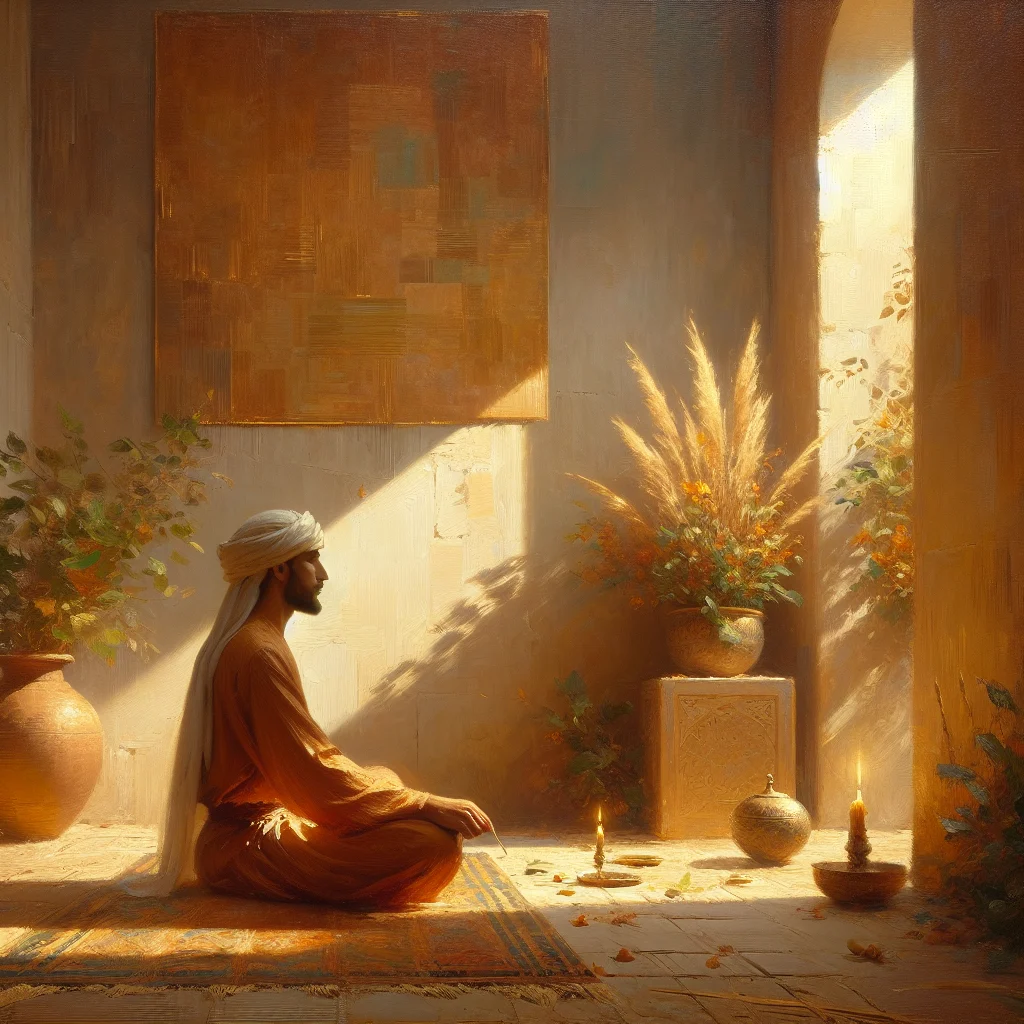
Understanding the Philosophy Behind Emptiness
Before diving into the practice itself, it’s essential to grasp what emptiness actually means in a meditative context. The term can be misleading because it doesn’t suggest nihilism or a depressing void. Rather, it points to a liberating recognition that our thoughts, emotions, and even our sense of self are fluid, impermanent, and ultimately not as solid as they appear.
The Buddhist Roots of Śūnyatā
In Buddhist teachings, particularly within Mahayana Buddhism, the concept of Śūnyatā plays a central role. This Sanskrit term translates to “emptiness” or “voidness,” but it carries nuanced philosophical implications. According to this view, all things are empty of independent existence—they arise in dependence on causes and conditions.
For example, when you look at a tree, you might think of it as a singular, independent object. However, upon closer examination, the tree exists because of soil, water, sunlight, seeds, and countless other factors. Without these conditions, there would be no tree. Therefore, the tree is “empty” of inherent, separate existence. This same principle applies to our thoughts, emotions, and sense of self.
Why Modern Practitioners Need Emptiness Meditation
In our contemporary world, we’re constantly bombarded with information, stimulation, and demands on our attention. Social media notifications, work emails, news updates, and personal obligations create a mental environment that’s perpetually full. As a result, many of us experience anxiety, overwhelm, and a sense of being disconnected from ourselves.
Meditation for emptiness provides an antidote to this overcrowded mental landscape. By intentionally creating space within our awareness, we can:
- Reduce mental clutter and improve focus
- Develop emotional resilience by recognizing the impermanent nature of feelings
- Cultivate inner peace that doesn’t depend on external circumstances
- Experience greater freedom from rigid identities and self-concepts
- Connect more authentically with others by letting go of fixed judgments
Moreover, research in mindfulness science has shown that practices emphasizing non-attachment and open awareness can lead to significant improvements in mental health and overall wellbeing.
How Meditation for Emptiness Differs from Other Practices
While all meditation practices share some common ground, meditation for emptiness has distinctive characteristics that set it apart from more commonly known techniques like guided mindfulness or concentration meditation.
Focused Attention vs. Open Awareness
Many beginning meditation practices emphasize focused attention—concentrating on the breath, a mantra, or a visual object. These techniques help train the mind and develop concentration skills. In contrast, meditation for emptiness typically involves open awareness, where you’re not focusing on any particular object but rather resting in spacious awareness itself.
Think of it this way: focused attention is like shining a flashlight on a specific spot, while open awareness is like standing in an open field under the vast sky. Both have their place, and in fact, many practitioners develop concentration skills first before moving into emptiness practices.
The Role of Letting Go
Another distinguishing feature of meditation for emptiness is its emphasis on letting go—not just of distracting thoughts, but of the habit of grasping itself. This includes releasing our attachment to:
- Particular mental states or experiences
- The need to “achieve” something through meditation
- Fixed ideas about who we are or should be
- Judgments about our meditation being “good” or “bad”
This approach can feel challenging at first because we’re so accustomed to goal-oriented thinking. However, the paradox of emptiness meditation is that by letting go of trying to achieve anything, we often discover the peace we were seeking all along.
Practical Techniques for Meditating on Emptiness
Now that we’ve explored the philosophical foundations, let’s turn to concrete practices you can begin today. Remember, these techniques are meant to be experimented with and adapted to your own needs and temperament.
Basic Emptiness Meditation Practice
Here’s a simple technique to get started with meditation for emptiness:
- Find a comfortable position: Sit in a way that feels stable and alert, whether on a cushion, chair, or bench. Your posture should support wakefulness without creating tension.
- Begin with a few grounding breaths: Take three to five deep breaths to settle into the present moment. Notice the sensations of breathing without trying to control them.
- Expand your awareness: Rather than narrowing your focus to a single point, allow your awareness to become spacious and open. Notice sounds, sensations, thoughts, and emotions as they arise without getting caught up in any of them.
- Recognize the space between thoughts: As thoughts come and go, begin to notice the gaps between them—those brief moments of mental silence. Rest your attention in this spaciousness.
- Practice non-grasping: When you notice yourself becoming attached to any particular experience, gently release it. Let everything come and go like clouds passing through an open sky.
- Rest in awareness itself: Rather than focusing on objects of awareness, turn attention toward the quality of awareness itself—the open, spacious capacity to know and experience.
Start with just 10 minutes and gradually extend your practice as it feels comfortable. Consistency matters more than duration when establishing this type of meditation.
Working with Thoughts in Emptiness Meditation
One common challenge in meditation for emptiness is knowing how to relate to thoughts. Unlike some practices that treat thoughts as distractions to be eliminated, emptiness meditation invites a different relationship with thinking.
When a thought arises, you might practice these steps:
- Notice it without judgment: Recognize that a thought has appeared without labeling it as good or bad.
- Observe its impermanent nature: Watch how the thought changes, evolves, or dissolves on its own without your interference.
- Recognize its emptiness: See that the thought itself has no substantial reality—it’s just a mental event arising from conditions.
- Return to open awareness: Let the thought be without following it into a story, and rest again in spacious awareness.
This approach cultivates what Buddhists call non-attachment—not suppressing or fighting thoughts, but also not being controlled by them. Over time, this creates tremendous mental freedom.
The Relationship Between Emptiness and Self-Concept
Perhaps the most profound aspect of meditation for emptiness involves exploring the nature of the self. In our everyday experience, we have a strong sense of “I”—a continuous, solid identity that seems to be at the center of our experience. However, emptiness meditation invites us to investigate this assumption more carefully.
Investigating the Sense of Self
During your practice, you might explore questions like:
- Where exactly is this “I” that I refer to?
- Is it located in my body, my thoughts, my memories?
- Does this sense of self remain constant, or does it change from moment to moment?
- What remains when I let go of identifying with thoughts and emotions?
These aren’t intellectual exercises meant to be answered with the thinking mind. Instead, they’re invitations to investigate your direct experience. What many practitioners discover is that the self is far more fluid, spacious, and empty than it initially appears.
The Liberation of Selflessness
This recognition of self-emptiness isn’t meant to be depressing or nihilistic. On the contrary, it can be profoundly liberating. When we’re less identified with a fixed, solid self, we experience:
- Less defensiveness and ego-driven reactions
- Greater compassion for ourselves and others
- Reduced anxiety about maintaining or protecting our self-image
- More authentic relationships based on genuine presence rather than role-playing
- Increased flexibility and adaptability in facing life’s changes
As you explore spirituality and inner work, you’ll likely find that concepts of self and emptiness become increasingly relevant to your growth journey.

Common Challenges in Meditation for Emptiness
Like any meaningful practice, meditation for emptiness comes with its challenges. Understanding these obstacles beforehand can help you navigate them more skillfully when they arise.
The Fear of Emptiness
For many people, the idea of emptiness triggers anxiety or fear. We’re accustomed to filling every moment with activity, thought, or stimulation. The prospect of encountering genuine spaciousness can feel threatening, as if we might disappear or cease to exist.
If you experience this fear, it’s important to approach the practice gradually and with self-compassion. You don’t need to dive into the deepest levels of emptiness immediately. Instead, start with brief moments of spacious awareness and gradually build your capacity over time. Working with a qualified teacher can also provide valuable support during this process.
Misunderstanding Emptiness as Nihilism
Another common pitfall is confusing emptiness with nihilism—the belief that nothing matters or has meaning. This is actually the opposite of what emptiness meditation reveals. Because things are empty of independent existence, they’re intimately interconnected with everything else. This recognition can deepen our sense of meaning and responsibility rather than diminishing it.
Furthermore, emptiness doesn’t negate the relative reality of our everyday experience. Pain still hurts, joy still feels good, and our actions still have consequences. The practice simply helps us see these experiences with greater clarity and less rigid attachment.
Getting Stuck in Conceptual Understanding
It’s possible to become fascinated with the philosophy of emptiness while missing the actual practice. Reading books, watching lectures, and discussing concepts can be valuable, but they’re not substitutes for direct experiential investigation. As the Buddhist saying goes, “The finger pointing at the moon is not the moon itself.”
Balance your intellectual study with regular practice. Even five minutes daily of simply sitting in open awareness will teach you more about emptiness than hours of conceptual analysis alone.
Integrating Emptiness Meditation into Daily Life
While formal sitting practice provides the foundation, the insights from meditation for emptiness become most valuable when integrated into everyday activities. This is where the practice truly transforms how you experience life.
Bringing Spaciousness to Everyday Moments
You can practice emptiness meditation informally throughout your day:
- During transitions: Between activities, pause for a few breaths and rest in open awareness rather than immediately moving to the next task.
- In conversations: Practice listening with spacious attention, without planning your response or getting caught in judgments.
- While walking: Notice the space around and within you as you move, experiencing the emptiness between thoughts.
- Before reacting: When emotions arise, create a brief gap of awareness before responding, recognizing the empty nature of both the emotion and the situation.
These micro-practices accumulate over time, gradually shifting your baseline experience toward greater spaciousness and freedom.
The Relationship Between Emptiness and Compassion
Interestingly, as practitioners deepen their understanding of emptiness, they often notice a natural increase in compassion and kindness. This isn’t coincidental—recognizing that all beings are empty of independent existence reveals our fundamental interconnectedness.
When you realize that the boundaries between self and other are more fluid than they appear, harming others becomes as senseless as harming yourself. This insight forms the basis for genuine compassion that extends beyond our immediate circle to include all beings.
For additional perspectives on how meditation transforms daily life, explore various approaches that complement emptiness practice.
Resources for Deepening Your Practice
As you continue exploring meditation for emptiness, various resources can support your journey and provide different perspectives on this profound practice.
Books and Teachers
Several excellent books address emptiness meditation from various angles. Consider exploring top-rated books on mindfulness that include chapters on emptiness and non-attachment. Classical texts like the Heart Sutra provide traditional Buddhist perspectives, while contemporary teachers offer modern interpretations accessible to Western practitioners.
Finding a qualified teacher—whether through in-person sanghas, online courses, or podcasts about mindfulness—can significantly accelerate your understanding and help you navigate challenges that arise in practice.
Complementary Practices
Meditation for emptiness works synergistically with other contemplative practices:
- Music therapy: Using sound and silence to explore spaciousness, as discussed in music therapy meditation
- Conscious breathing: Developing awareness of the space between breaths through conscious meditation techniques
- Sleep practices: Exploring emptiness through sleep healing frequencies and nighttime awareness
- Holistic approaches: Integrating emptiness meditation with broader holistic living practices
Building a Sustainable Practice
The key to benefiting from meditation for emptiness is consistency rather than intensity. A daily practice of even 10-15 minutes will yield more profound results than occasional longer sessions. Consider these tips for establishing a sustainable routine:
- Set a regular time: Practice at the same time each day to build the habit.
- Create a dedicated space: Having a specific place for meditation reinforces your commitment.
- Start small: Begin with manageable durations and gradually extend them.
- Track your practice: Keep a simple journal noting insights, challenges, and changes you observe.
- Join a community: Practicing with others provides support, accountability, and shared wisdom.
Remember, the goal isn’t to achieve some perfect state of emptiness. Instead, the practice itself—with all its ups and downs—is the path. Each moment of recognizing and resting in spacious awareness is complete in itself.
The Transformative Power of Embracing Emptiness
As we conclude this exploration of meditation for emptiness, it’s worth reflecting on why this ancient practice remains so relevant in our modern world. In an age of constant connectivity, information overload, and perpetual busyness, the capacity to rest in spacious awareness offers a radical alternative.
Meditation for emptiness teaches us that we don’t need to be constantly full—of thoughts, activities, identities, or achievements—to be complete. In fact, it’s often in the spaciousness, in the letting go, that we discover what we’ve been seeking all along: peace, clarity, and a sense of wholeness that doesn’t depend on external circumstances.
This practice challenges some of our deepest assumptions about who we are and how reality works. Yet this very challenge opens doors to profound freedom and transformation. When we’re less identified with a fixed self, we become more flexible, resilient, and compassionate. When we recognize the emptiness of our thoughts and emotions, they lose their power to control us.
Moreover, emptiness meditation naturally supports other aspects of personal growth and mental health. By creating internal space, we develop the capacity to respond rather than react, to choose our actions consciously rather than being driven by unconscious patterns.
The journey into emptiness is ultimately a journey toward wholeness—not by adding more to ourselves, but by recognizing the spacious awareness that’s been here all along, beneath the noise and clutter of everyday thinking. This awareness is always available, always present, waiting for us to simply relax into it.
If you’re ready to deepen your meditation practice and explore the transformative power of emptiness, consider Everyday Calm: A Beginner’s Guide to Daily Meditation as a practical companion on your journey. Whether you’re just beginning or seeking to refresh your practice, this resource offers clear guidance for establishing a sustainable meditation routine.
Finally, remember that meditation for emptiness isn’t about reaching some distant goal or becoming a different person. It’s about discovering the freedom and peace that’s available right now, in this very moment, when we let go and rest in the spacious awareness that we already are. May your practice bring you ever-deepening glimpses of this liberating truth.

