
If you’ve ever felt your face flush bright red during an important meeting or experienced a sudden wave of heat while standing in line at the grocery store, you’re not alone. Hot flash embarrassment affects countless women navigating menopause and perimenopause, creating a cycle of anxiety that can actually make symptoms worse. However, meditation and mindfulness practices offer powerful coping strategies that can help you regain control and confidence during these challenging moments.
The social stigma surrounding hot flashes often amplifies the physical discomfort. Many women report feeling self-conscious, exposed, or worried about what others might think when they suddenly start sweating or fanning themselves. In addition, this emotional response triggers the body’s stress response, which can intensify the hot flash itself, creating a frustrating feedback loop.
Fortunately, meditation provides practical tools to break this cycle. By learning to respond rather than react to hot flashes, you can reduce both the physical intensity and the emotional distress associated with these episodes.

Start having calm — in 8 minutes.
Understanding the Hot Flash Embarrassment Connection
The embarrassment associated with hot flashes isn’t just about physical discomfort. According to research from the North American Menopause Society, the psychological impact of vasomotor symptoms can significantly affect quality of life, self-esteem, and social interactions.
Why Hot Flashes Feel So Embarrassing
Several factors contribute to the embarrassment many women experience:
- Visibility: Flushed skin and visible sweating make hot flashes obvious to others
- Loss of control: The unpredictable nature creates anxiety about when the next episode will occur
- Social expectations: Cultural norms around appearing “put together” intensify self-consciousness
- Workplace concerns: Professional settings can feel particularly challenging for managing symptoms
- Generational silence: Limited public discussion has historically made menopause feel taboo
Because these feelings are so common, recognizing them as a normal response can be the first step toward managing them more effectively. The hot flash anxiety cycle demonstrates how our emotional response to symptoms can perpetuate the problem.
The Stress-Hot Flash Feedback Loop
When you feel embarrassed about a hot flash, your body releases stress hormones like cortisol and adrenaline. These hormones, in turn, can trigger the thermoregulation system to malfunction further, potentially intensifying or prolonging the episode.
This biological response explains why anticipatory anxiety about hot flashes can actually increase their frequency and severity. Breaking this cycle requires addressing both the physical and emotional components simultaneously.
Meditation Techniques for Hot Flash Embarrassment
Meditation offers evidence-based approaches to managing hot flash embarrassment. While these practices won’t necessarily prevent hot flashes entirely, they can dramatically change your experience of them and reduce associated distress.
Mindful Awareness Practice
The foundation of meditation-based coping starts with mindful awareness. This practice involves observing your experience without judgment or resistance. For example, instead of thinking “This is terrible, everyone is staring at me,” you might notice “I’m feeling heat rising, my heart rate is increasing.”
Try this simple technique during a hot flash:
- Pause and take three slow, deep breaths
- Notice the physical sensations without labeling them as good or bad
- Remind yourself that this will pass, just like previous episodes
- Return your attention to your breath whenever your mind wanders to embarrassment
- Allow the sensation to move through you rather than fighting against it
Research published in medical journals indicates that mindfulness-based stress reduction can decrease the bother associated with vasomotor symptoms, even when frequency remains unchanged.
Cooling Visualization Meditation
Visualization techniques can provide immediate relief during hot flash episodes. Cold visualization meditation works by engaging your mind’s powerful ability to influence physiological responses.
When you feel a hot flash beginning, try this approach:
- Close your eyes if possible (or soften your gaze if in public)
- Imagine standing in a cool mountain stream with water flowing over your feet
- Visualize the cooling sensation moving up through your body
- Picture yourself surrounded by snow or holding ice cubes
- Engage all your senses in the cooling imagery
Although this practice may seem simple, many women report that it genuinely helps reduce the intensity and duration of hot flashes. Moreover, it gives you something productive to focus on rather than dwelling on embarrassment.

Compassionate Self-Talk During Episodes
The way you speak to yourself during a hot flash significantly impacts your emotional experience. Self-compassion practices from meditation traditions can transform your internal dialogue.
Instead of harsh self-criticism like “I look ridiculous” or “Everyone thinks I’m falling apart,” try compassionate alternatives:
- “This is a natural biological process affecting millions of women”
- “My body is adjusting to hormonal changes—this is temporary”
- “I’m handling this with grace and strength”
- “Most people are focused on their own concerns, not watching me”
As a result of consistently practicing kinder self-talk, many women find that the embarrassment decreases significantly over time. This approach aligns with principles found in affirmations and positive thinking practices.
Building a Preventive Meditation Practice
While in-the-moment techniques are valuable, establishing a regular meditation practice can reduce the frequency and intensity of hot flashes over time. Furthermore, consistent practice builds your capacity to remain calm during episodes.
Daily Mindfulness Meditation
Dedicating just 10-20 minutes daily to meditation can create measurable changes in how your body responds to stress. Studies comparing meditation versus HRT for hot flashes show promising results for non-pharmaceutical approaches.
Begin with this simple daily practice:
- Find a quiet space where you won’t be disturbed
- Sit comfortably with your spine relatively straight
- Set a timer for 10-15 minutes
- Focus your attention on your natural breath
- When thoughts arise (including worries about hot flashes), gently return to the breath
- Practice this same routine at approximately the same time each day
Consistency matters more than duration. Therefore, a brief daily practice produces better results than occasional longer sessions.
Tracking Progress with a Mindfulness Journal
Maintaining a mindfulness journal for tracking hot flashes can reveal patterns and progress that might otherwise go unnoticed. This practice combines meditation with practical observation.
Consider recording:
- Time of day and circumstances when hot flashes occur
- Your emotional state before and after episodes
- Which coping techniques you used and their effectiveness
- Any hot flash triggers you notice
- Changes in frequency or intensity over time
In addition to providing valuable data, journaling itself serves as a meditative practice that increases self-awareness and reduces reactivity.
Practical Coping Strategies for Social Situations
Hot flash embarrassment often peaks in social or professional settings. However, combining meditation principles with practical strategies can help you navigate these situations with greater confidence.
Preparation and Planning
Anticipatory planning reduces anxiety by giving you a sense of control. Before entering potentially stressful situations, consider these approaches:
- Wear layers that can be easily removed without drawing attention
- Choose fabrics that wick moisture and don’t show sweat
- Identify cooling resources in your environment (fans, cold water, outdoor access)
- Practice your breathing technique so it becomes automatic
- Remind yourself of your coping tools before entering the situation
While you’re preparing practically, also prepare mentally through brief meditation. Even three minutes of mindful breathing before a meeting or social event can center you and reduce anticipatory anxiety.
Disclosure as a Coping Tool
Sometimes, directly acknowledging what’s happening can eliminate embarrassment. When you’re comfortable doing so, a simple statement like “Excuse me, I’m having a hot flash” can transform an awkward situation into a neutral one.
Many women report that disclosure actually strengthens connections, particularly with other women who either experience hot flashes themselves or will in the future. Consequently, what felt like a source of shame becomes an opportunity for authentic connection.
Reframing Public Perception
Meditation teaches us that our thoughts about situations often cause more suffering than the situations themselves. Most people either don’t notice hot flashes as much as you think or, if they do notice, feel sympathetic rather than judgmental.
Challenge catastrophic thinking by asking yourself:
- What evidence do I have that people are judging me?
- If someone I cared about had a hot flash, would I think less of them?
- Will this matter tomorrow, next week, or next year?
- What’s the worst realistic outcome, and could I handle it?
This cognitive approach complements meditation practices and can be explored further through mental health and wellbeing resources.
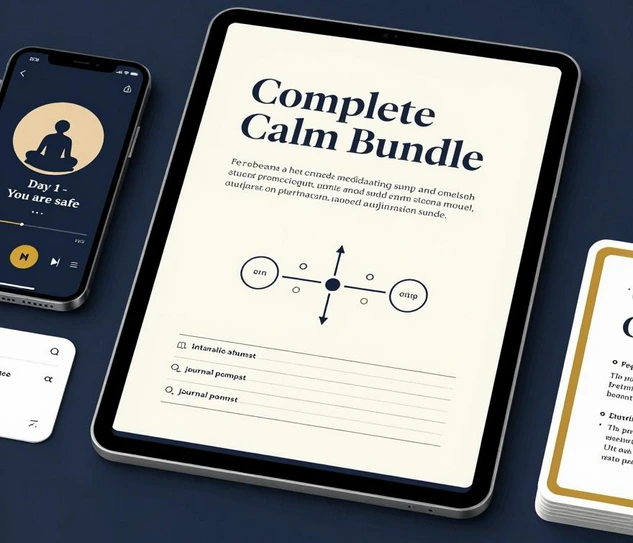
Finally. In one place.
- 30-Day Guided Audio Journey
$297 - Deep Calm Songs — 30 tracks
$197 - Emergency Calm Library
$147 - Breath-Work Collection
$127
- 74-Page Meditation Manual
$147 - 30-Day Calm Journal
$147 - Progress Tracker + Cards
$97 - Lifetime + All Future Updates
$81
Managing Nocturnal Hot Flashes and Sleep Disruption
While daytime hot flash embarrassment is challenging, nocturnal hot flashes create their own difficulties. Sleep disruption can increase emotional reactivity, making daytime embarrassment harder to manage.
For nighttime episodes, try these meditation-based approaches:
- Practice a body scan meditation before sleep to promote relaxation
- Use cooling imagery if you wake during a hot flash
- Avoid checking the time, which can increase sleep anxiety
- Return to breath-focused meditation rather than ruminating about lost sleep
- Create a comfortable sleep environment with temperature control
Because sleep deprivation amplifies stress responses, addressing nighttime symptoms helps reduce daytime embarrassment as well.
Integrating Meditation with Other Approaches
Meditation works best as part of a comprehensive approach to managing menopausal symptoms. Complementary meditation therapy can enhance other treatments rather than replacing them entirely.
Lifestyle Factors That Support Meditation Practice
Several lifestyle modifications can enhance your meditation practice and reduce hot flash frequency:
- Regular exercise: Physical activity reduces stress and may decrease hot flash frequency
- Balanced nutrition: Avoiding triggers like caffeine, alcohol, and spicy foods can help
- Stress management: Address chronic stressors that may exacerbate symptoms
- Social connection: Building supportive relationships reduces isolation
- Professional support: Consider working with a meditation teacher or therapist
These approaches align with principles of holistic living, which views health as interconnected physical, emotional, and spiritual wellbeing.
When to Seek Additional Support
While meditation offers powerful coping tools, some situations warrant additional medical evaluation. Consult a healthcare provider if:
- Hot flashes severely disrupt your quality of life despite consistent practice
- You experience symptoms of depression or anxiety alongside hot flashes
- Sleep disruption becomes chronic and debilitating
- You’re interested in exploring hormone therapy or other medical treatments
- Hot flashes occur alongside other concerning symptoms
Meditation and medical treatment aren’t mutually exclusive. In fact, many women find that combining approaches produces the best results for managing menopause and perimenopause symptoms.
Moving Forward with Confidence
Hot flash embarrassment doesn’t have to control your life. Through consistent meditation practice, compassionate self-talk, and practical coping strategies, you can transform your relationship with this challenging symptom.
Remember that meditation is a skill that develops over time. Initially, you might find it difficult to remain calm during intense hot flashes. However, with practice, your capacity to stay centered grows stronger. Each time you respond mindfully rather than reactively, you’re rewiring your brain’s response patterns.
The journey through menopause offers unexpected opportunities for personal growth. Many women discover that learning to navigate hot flash embarrassment with grace builds resilience that extends to other life challenges. Moreover, the meditation skills you develop now will serve you throughout the rest of your life.
As you continue practicing these techniques, be patient with yourself. Some days will be easier than others, and that’s completely normal. The goal isn’t perfection but rather developing a toolkit of strategies that help you feel more empowered and less controlled by your symptoms.
Finally, consider connecting with others who understand what you’re experiencing. Whether through online communities, local support groups, or conversations with friends, sharing your journey can reduce the isolation that often accompanies hot flash embarrassment. You’re part of a vast community of women navigating this transition, and there’s tremendous strength in that shared experience.

