
Navigating menopause can feel overwhelming, especially when hot flashes interrupt your sleep and mood swings affect your daily life. However, meditation apps for menopause support offer a convenient and accessible way to manage these challenging symptoms from the comfort of your smartphone. In this comprehensive guide, we’ll explore how digital meditation tools can become your trusted companion during this transformative life stage.
The hormonal shifts that occur during perimenopause and menopause affect more than just your body—they impact your mental wellbeing, emotional stability, and overall quality of life. While traditional remedies have their place, technology now offers innovative solutions that fit seamlessly into modern lifestyles.
Research shows that regular meditation practice can significantly reduce menopause symptoms, including hot flashes, anxiety, and sleep disturbances. In fact, studies published by the National Center for Biotechnology Information demonstrate that mindfulness-based interventions can improve both physical and psychological symptoms associated with menopause.
Understanding Menopause and Why Meditation Matters
Before diving into specific apps, it’s essential to understand why meditation proves particularly effective during this life transition. Menopause typically occurs between ages 45 and 55, marking the end of reproductive years. During this time, declining estrogen and progesterone levels trigger various physical and emotional changes.
These hormonal fluctuations affect the brain’s neurotransmitters, particularly serotonin and dopamine, which regulate mood and emotional responses. Consequently, many women experience increased anxiety, irritability, and even depression during this period.
Meditation works by activating the parasympathetic nervous system, often called the “rest and digest” response. This activation counteracts the stress response that often intensifies menopause symptoms. Through consistent practice, meditation helps regulate cortisol levels, improve sleep quality, and enhance emotional resilience.
The Science Behind Meditation and Hormonal Health
Recent neuroscience research reveals that meditation literally changes brain structure. Regular practitioners show increased gray matter density in regions associated with emotional regulation and decreased activity in the amygdala—the brain’s fear center.
For menopausal women, this means better stress management, improved mood stability, and reduced symptom severity. Additionally, meditation influences the hypothalamic-pituitary-adrenal (HPA) axis, which plays a crucial role in hormonal balance. As a result, consistent practice can help mitigate the cascade of symptoms triggered by hormonal changes.
Free Guided Meditation · Day 1
You Are Safe Right Now.
5 min · Breathwork & body scan · Stress release
Liked it? Get the full audio.
Enter your email and we'll send you the complete 5-minute meditation — free, straight to your inbox.
Zero spam. Unsubscribe anytime.
Check Your Inbox.
Your full 5-minute meditation is on its way. Open the email and hit play — your reset starts now.
Can't find it? Check your spam folder.

Top Features to Look for in Meditation Apps for Menopause Support
Not all meditation apps address the specific needs of menopausal women. When choosing your digital meditation companion, consider these essential features that make a real difference during this transitional phase.
Menopause-Specific Content
The best apps offer guided meditations specifically designed for menopause symptoms. Look for sessions targeting hot flashes, night sweats, mood swings, and brain fog. These specialized programs acknowledge your unique challenges and provide tailored solutions.
Furthermore, quality apps include educational content about the menopause transition itself. Understanding what’s happening in your body empowers you to manage symptoms more effectively. Some apps even feature expert advice from menopause specialists and integrative health practitioners.
Customizable Session Lengths
Because menopause affects concentration and energy levels, flexibility matters. The ideal app offers sessions ranging from five-minute quick relief meditations to longer, more immersive practices. This variety allows you to adapt your practice to your daily schedule and current symptom severity.
For instance, during a particularly challenging day with frequent hot flashes, you might prefer shorter, more frequent sessions. On calmer days, however, you can engage in deeper practices that build long-term resilience.
Sleep-Focused Programs
Sleep disturbances rank among the most common and frustrating menopause symptoms. Therefore, prioritize apps that include dedicated sleep content—such as sleep meditations, bedtime stories for adults, and soundscapes designed to promote rest.
Many women find that body scan meditation for perimenopause particularly helpful for nighttime use. This technique helps release physical tension that often accompanies hormonal fluctuations, making it easier to drift into restful sleep.
Leading Meditation Apps Tailored for Menopausal Women
While numerous meditation apps exist, several stand out for their menopause-friendly features and comprehensive support systems. Let’s explore the options that have earned praise from women navigating this transition.
Insight Timer: Free and Community-Focused
Insight Timer offers an impressive collection of free meditations, including many specifically addressing menopause. With over 130,000 guided meditations, you’ll find diverse approaches from teachers worldwide. The app’s community features allow you to connect with other menopausal women, creating a support network that extends beyond meditation itself.
Moreover, Insight Timer includes courses on topics like mindfulness-based stress reduction for menopause, providing structured learning paths. The timer function also accommodates experienced meditators who prefer unguided practice.
Calm: Premium Content with Sleep Stories
Calm has gained recognition for its high-quality production and celebrity-voiced content. While it requires a subscription, many users find the investment worthwhile. The app features a dedicated “Women’s Health” section with meditations addressing hormonal changes and life transitions.
Particularly noteworthy are Calm’s sleep stories, narrated in soothing voices that help quiet an overactive mind. For women experiencing racing thoughts due to hormonal fluctuations, these stories provide welcome relief. The app also includes breathing exercises specifically designed for managing hot flashes in the moment.
Headspace: Science-Backed and User-Friendly
Headspace combines approachable design with evidence-based content. The app’s founder, Andy Puddicombe, brings both Buddhist monk training and contemporary psychology to the platform. Headspace offers structured courses that build meditation skills progressively, which benefits beginners feeling overwhelmed by menopause symptoms.
Additionally, Headspace includes “SOS” sessions for moments of acute stress or anxiety—invaluable when mood swings strike unexpectedly. The app tracks your progress, providing motivation through statistics and milestones that encourage consistency.
Simple Habit: Five-Minute Solutions for Busy Lives
Simple Habit recognizes that busy schedules often conflict with self-care needs. Consequently, the app specializes in short, targeted meditations that fit into packed days. Their “Life Transitions” category includes content relevant to menopause, perimenopause, and midlife changes.
The app also offers on-the-go sessions for specific situations—commuting, work breaks, or even during insomnia episodes. This situational approach helps you address symptoms as they arise rather than only during dedicated meditation time.
Integrating Meditation Apps into Your Menopause Management Plan
Downloading an app represents just the first step. To maximize benefits, you’ll need to integrate your chosen app into a comprehensive menopause management strategy. Here’s how to make meditation a sustainable habit that truly supports your wellbeing.
Creating a Consistent Practice Schedule
Consistency matters more than duration when establishing a meditation habit. Start with just five minutes daily rather than attempting hour-long sessions that become unsustainable. Many successful practitioners meditate at the same time each day, creating a routine that becomes automatic.
Morning meditation can set a calm tone for the day ahead, while evening practice prepares your nervous system for sleep. Some women benefit from both bookend sessions—morning and night—with additional shorter practices as needed for symptom management.
Combining Digital and Traditional Practices
While meditation apps provide excellent guidance, consider complementing them with other supportive practices. For example, walking meditation for menopausal women offers both mindfulness benefits and gentle physical activity that supports bone health.
Similarly, yoga nidra for perimenopause provides deep relaxation that apps can guide but that also works wonderfully in live classes or through dedicated audio recordings. This multi-modal approach addresses menopause symptoms from various angles.
Tracking Symptoms and Progress
Many meditation apps include built-in tracking features, but consider supplementing with a symptom journal. Record your meditation practice alongside menopause symptoms like hot flash frequency, mood quality, and sleep patterns. Over time, you’ll likely notice correlations that motivate continued practice.
Furthermore, tracking helps you identify which meditation styles work best for specific symptoms. You might discover that visualization meditation for menopause symptoms effectively reduces hot flash intensity, while breath-focused practices better manage anxiety.
Addressing Common Challenges When Using Meditation Apps
Despite their benefits, meditation apps present certain challenges—especially for women dealing with menopause-related brain fog and concentration difficulties. Let’s address these obstacles and provide practical solutions.
Overcoming Brain Fog and Distractibility
Cognitive changes during menopause can make meditation feel frustratingly difficult. If you find your mind wandering excessively, don’t interpret this as failure. Instead, choose guided meditations with frequent verbal cues that help redirect attention without creating additional stress.
Shorter sessions also help when concentration proves challenging. Even two-minute breathing exercises provide benefits when focus feels impossible. Remember that noticing distraction and returning to the present moment is the practice—not maintaining perfect concentration.
Managing Technology Overwhelm
Ironically, the device you use for meditation can become a source of stress. Notifications, updates, and the temptation to check other apps interrupt the peace you’re seeking. Therefore, enable “Do Not Disturb” mode before starting your practice.
Some practitioners prefer downloading sessions for offline use, eliminating connection issues and reducing reliance on internet access. This approach also allows meditation in nature or other locations where you might not have cellular service.
Finding Motivation During Difficult Days
Menopause brings days when even opening an app feels overwhelming. On these occasions, remember that even minimal practice maintains your habit. Set a timer for just one minute of conscious breathing—no app required. Often, this tiny commitment leads to longer practice once you’ve begun.
Additionally, join app communities or challenge groups that provide accountability and encouragement. Seeing others maintain their practice during difficult times can inspire you to show up for yourself, even when motivation wanes.
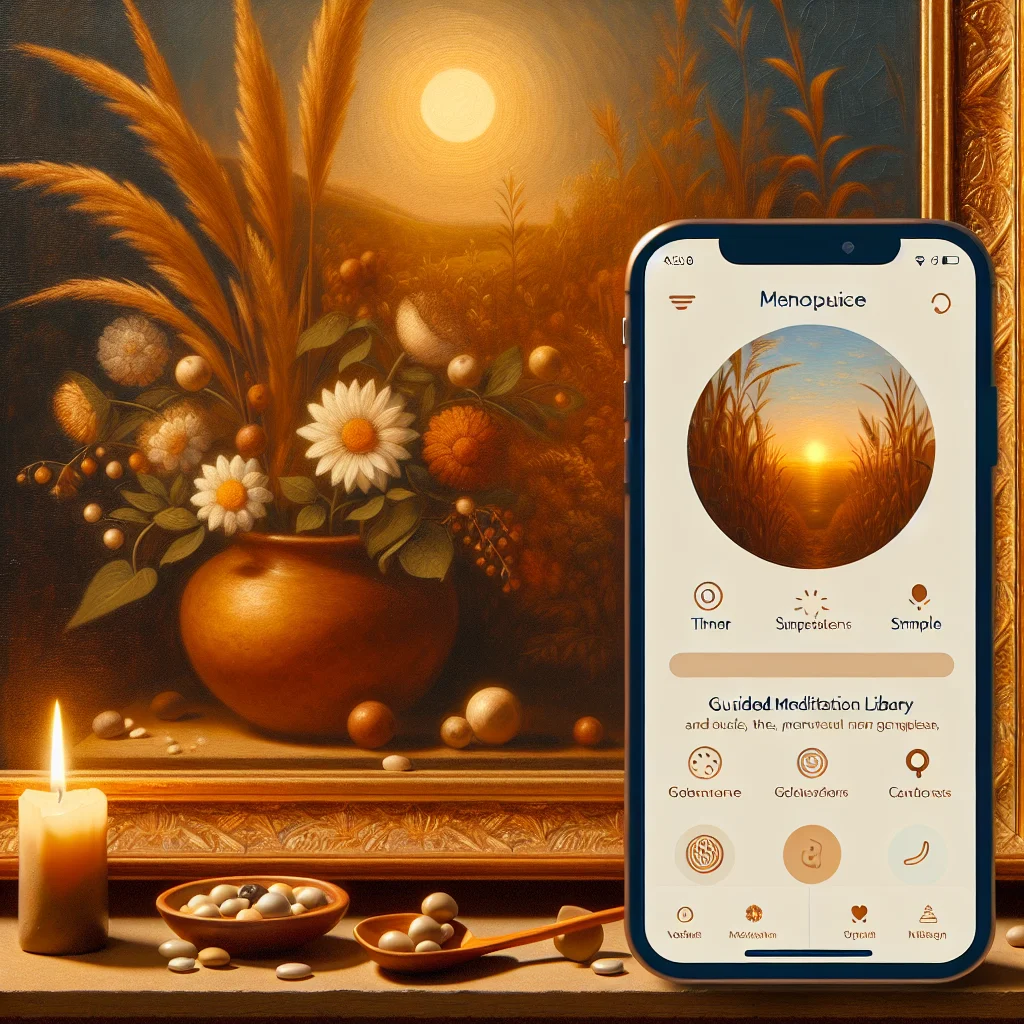
Beyond the App: Building a Holistic Menopause Support System
While meditation apps for menopause support provide valuable tools, they work best as part of a comprehensive wellness approach. Consider these complementary strategies that enhance the benefits of your digital meditation practice.
Nutrition and Hormonal Balance
Certain foods support hormonal health and reduce menopause symptoms. Phytoestrogen-rich foods like flax seeds, soy, and legumes provide gentle hormonal support. Meanwhile, reducing caffeine and alcohol often decreases hot flash frequency and improves sleep quality.
Meditation itself can improve your relationship with food by increasing awareness of hunger cues and emotional eating patterns. This mindful eating approach supports healthy weight management during a time when metabolism naturally slows.
Movement and Physical Activity
Regular exercise complements meditation by reducing stress hormones, improving mood, and supporting bone density—crucial during menopause when osteoporosis risk increases. Activities like tai chi, yoga, and swimming combine movement with mindfulness principles.
Many meditation apps now include movement-based practices like mindful stretching or seated meditation adapted for those with mobility concerns. These gentle movements help release physical tension that accompanies hormonal changes.
Community and Social Support
Menopause can feel isolating, especially when symptoms interfere with social activities. However, connecting with other women experiencing similar challenges provides validation and practical advice. Many meditation apps include community features, but also consider local menopause support groups or online forums.
According to the North American Menopause Society, social support significantly impacts how women experience this transition. Sharing your meditation journey with others creates accountability while reducing feelings of isolation.
Advanced Meditation Techniques for Symptom-Specific Relief
As your practice deepens, you might explore advanced techniques that target specific menopause symptoms. Many quality apps offer these specialized approaches once you’ve established foundational skills.
Hot Flash Management Through Breath Work
Specific breathing patterns can interrupt the cascade of physical responses that constitute a hot flash. Slow, deep breathing activates the parasympathetic nervous system, potentially reducing hot flash intensity and duration. Apps like Calm and Insight Timer offer guided breathing exercises designed for this purpose.
The 4-7-8 breathing technique proves particularly effective: inhale for four counts, hold for seven, exhale for eight. This pattern calms the nervous system and can be practiced discreetly anywhere—during meetings, social gatherings, or nighttime awakenings.
Visualization for Hormonal Harmony
Visualization meditation involves creating mental images that support healing and balance. Although it might sound esoteric, research shows that visualization activates similar brain regions as actual experiences, making it a powerful tool for symptom management.
For menopause, you might visualize your endocrine system functioning harmoniously, cooling waves washing over your body during hot flashes, or peaceful sleep enveloping you at bedtime. Many apps provide guided visualizations specifically designed for women’s hormonal health.
Body Scan for Physical Awareness
Body scan meditation systematically focuses attention on different body parts, releasing tension and increasing bodily awareness. This practice helps you recognize early signs of symptoms, allowing proactive management before they intensify.
For instance, noticing shoulder tension or shallow breathing might signal an approaching anxiety episode or hot flash. With this awareness, you can implement coping strategies immediately rather than waiting until symptoms peak. Many apps offer body scans ranging from five to forty-five minutes.
Evaluating Your Progress and Adjusting Your Practice
Regular assessment ensures your meditation practice continues meeting your evolving needs throughout the menopause transition. Because symptoms change over time, your approach should adapt accordingly.
Recognizing Subtle Improvements
Benefits often accumulate gradually, making them easy to overlook. Pay attention to changes like improved sleep quality, better stress management, or fewer intense mood swings. These improvements might manifest as increased patience with daily frustrations or greater emotional resilience during challenging situations.
Additionally, physical symptoms may decrease in frequency or intensity. While meditation won’t eliminate menopause, it significantly influences your experience and perception of symptoms. Some women report that hot flashes become less distressing even if frequency remains unchanged.
When to Switch Apps or Approaches
If you’re not experiencing benefits after consistent practice (at least six weeks), consider changing apps or meditation styles. Different teaching approaches resonate with different people—some prefer spiritual frameworks while others want purely secular content.
Similarly, your needs might evolve as you move through perimenopause into postmenopause. Apps offering diverse content allow you to explore various techniques without switching platforms. However, don’t hesitate to try new apps if your current choice no longer serves you.
Financial Considerations: Free vs. Premium Meditation Apps
Budget impacts app selection, especially given that many quality meditation apps require subscriptions. Let’s examine the value proposition of both free and paid options.
Maximizing Free App Features
Apps like Insight Timer offer extensive free content—more than most people could explore in years. The trade-off typically involves advertisements, limited access to courses, or restricted community features. However, for many users, free versions provide everything needed for effective practice.
Additionally, many premium apps offer free trials, allowing you to test features before committing financially. Take advantage of these trials to determine which interface, teachers, and meditation styles resonate most before subscribing.
Weighing Premium Subscription Benefits
Premium subscriptions typically cost between $10-15 monthly or $50-70 annually. In exchange, you receive ad-free experiences, downloadable content, comprehensive courses, and often personalized recommendations based on your usage patterns.
Consider whether the premium features address your specific needs. If sleep represents your primary challenge, an app with extensive sleep content justifies the investment. However, if you primarily need basic guided meditations, free versions might suffice.
Ultimately, the best meditation app for menopause support is one you’ll actually use consistently. Sometimes paying for a subscription increases commitment through financial investment, making it psychologically easier to maintain regular practice.
Creating Your Personalized Menopause Meditation Plan
Armed with information about available apps and techniques, you’re ready to create a personalized plan that addresses your unique symptom profile and lifestyle constraints.
Step 1: Identify Your Primary Symptoms
List your most challenging menopause symptoms, ranking them by severity and impact on daily life. This prioritization helps you select app content that addresses your immediate needs while building skills for long-term wellbeing.
For example, if sleep disturbances most significantly affect your quality of life, prioritize apps with robust sleep content. If anxiety or mood swings create greater challenges, focus on stress-reduction and emotional regulation meditations.
Step 2: Assess Your Schedule and Commitments
Realistic assessment prevents setting unattainable goals that lead to discouragement. Consider your daily schedule, energy patterns, and existing commitments. When do you have five to twenty minutes for meditation? Morning, lunch break, evening, or bedtime?
Be honest about your current capacity. Starting with five minutes daily proves more effective than planning thirty-minute sessions you’ll abandon after one week. You can always extend practice duration as the habit solidifies.
Step 3: Select Your Primary App and Backup Options
Choose one app as your primary platform to avoid decision fatigue and scattered practice. However, keep a backup app for variety or when your primary choice doesn’t address specific situations. This approach provides consistency while maintaining flexibility.
Many women use one app for daily practice and another specifically for sleep. This dual-app approach maximizes strengths of different platforms without overwhelming your device or attention.
Step 4: Commit to a Trial Period
Give your chosen approach at least six weeks before making major changes. This timeframe allows benefits to accumulate while preventing premature abandonment. Mark your calendar for a progress check-in, when you’ll honestly assess whether the practice serves your needs.
During this trial period, practice meditation daily—even if only for two minutes on difficult days. Consistency matters more than duration for habit formation and long-term neurological changes that support symptom management.
Final Thoughts: Embracing Technology as a Menopause Ally
The menopause transition presents challenges, but technology offers unprecedented support through accessible, evidence-based meditation tools. Meditation apps for menopause support provide guidance, structure, and community—transforming this potentially difficult period into an opportunity for personal growth and self-discovery.
By combining digital meditation with comprehensive lifestyle approaches, you create a powerful support system that addresses physical symptoms while nurturing emotional resilience. Remember that menopause marks not an ending but a transition into a new life phase—one that can bring wisdom, freedom, and deeper self-understanding.
Whether you’re just beginning to experience perimenopause symptoms or navigating full menopause, meditation apps offer valuable support at every stage. Start small, remain consistent, and trust the process. As with menopause itself, the journey matters more than the destination.
For additional support during this transition, explore resources on menopause and perimenopause or dive deeper into specific practices like Zen meditation for menopausal changes. You don’t have to navigate this journey alone—both technology and community stand ready to support your wellbeing.
Silence the Chaos in Your Head —
in 5 Minutes Flat.
Get instant access to a free guided meditation audio that rewires your nervous system for calm, kills anxiety at the root, and resets your entire day — no experience needed.
- Instantly drop cortisol levels — feel the shift before the 5 minutes is up
- Unlock razor-sharp focus — designed for high-achievers who can't afford brain fog
- Break the anxiety loop for good — a repeatable reset, every single morning
- 100% free, zero fluff — no apps, no subscriptions, just results
You're In.
Check Your Inbox.
Your free 5-minute guided meditation is on its way.
Open the email and hit play — your first reset starts now.
Can't find it? Check spam and mark us as safe.

