
In our hyperconnected world, finding moments of genuine solitude has become increasingly rare. Private meditation offers a sanctuary where you can disconnect from external noise and reconnect with your inner self. Unlike group sessions or public classes, this deeply personal practice allows you to explore mindfulness on your own terms, at your own pace, and in your own sacred space.
Many people struggle with the idea of meditating alone, feeling they need guidance or community support. However, establishing a private meditation routine can actually deepen your practice in ways that group settings cannot. It provides complete freedom to experiment, to fail, to discover what truly resonates with your unique spiritual journey.
Creating this personal sanctuary doesn’t require expensive equipment or special training. What matters most is your commitment to showing up for yourself, day after day, in the quiet moments you carve out from your busy schedule.
If you’re just beginning this journey, Everyday Calm: A Beginner’s Guide to Daily Meditation offers practical strategies to establish your personal practice with confidence and clarity.
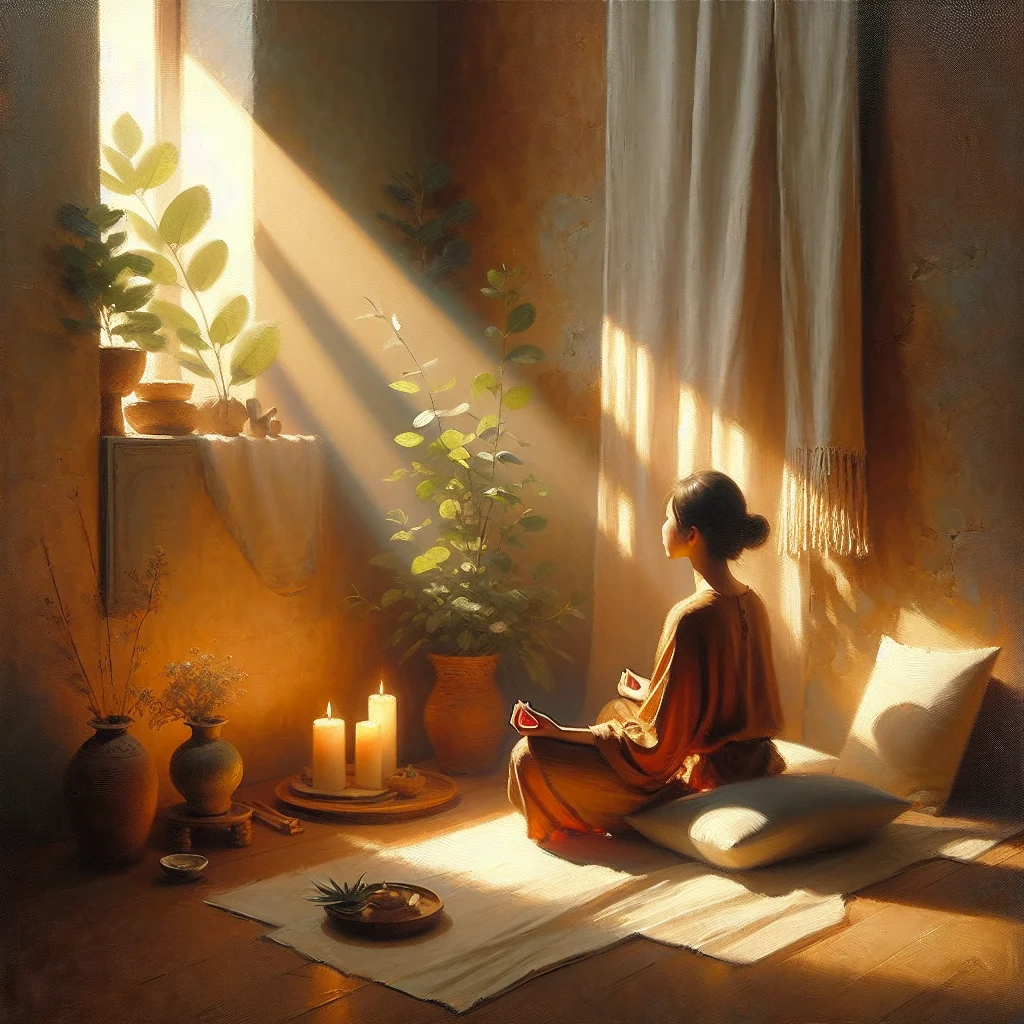
Understanding the Essence of Private Meditation
At its core, private meditation is the practice of turning inward without external facilitation. While guided sessions and classes certainly have their place, there’s something profoundly transformative about sitting alone with your thoughts, breath, and awareness.
This solitary practice strips away the social dynamics that can sometimes distract from genuine introspection. When you meditate privately, there’s no concern about what others might think, no pressure to “perform” mindfulness correctly, and no schedule to follow except your own.
The Historical Roots of Solitary Practice
Throughout history, spiritual seekers have valued solitary contemplation as essential to awakening. Buddhist monks traditionally spend extended periods in isolated meditation retreats. Christian mystics sought desert solitude for prayer and contemplation. According to Wikipedia’s comprehensive overview of meditation, many ancient traditions emphasize personal practice as the foundation of spiritual development.
These historical practices weren’t about avoiding community; rather, they recognized that certain insights only emerge in complete solitude. The silence allows you to hear your authentic voice beneath the layers of social conditioning.
Why Privacy Matters in Meditation
Privacy creates psychological safety for vulnerability. In your own space, you can cry, laugh, or sit with uncomfortable emotions without self-consciousness. This emotional freedom accelerates healing and self-discovery in remarkable ways.
Moreover, private meditation allows you to develop authentic practice rather than imitation. You learn what techniques genuinely serve you, not what looks impressive or what others recommend. This self-knowledge becomes invaluable as your practice matures.
Creating Your Private Meditation Space
The physical environment significantly impacts your ability to sustain focus and relax into deeper states. Fortunately, you don’t need an entire room dedicated to meditation—just a corner that signals to your brain that it’s time to turn inward.
Start by identifying a spot where you can sit undisturbed for at least 10-15 minutes. This might be a chair in your bedroom, a cushion in a closet, or even a specific spot in your garden. Consistency matters more than aesthetics at first.
Essential Elements for Your Sacred Space
Consider incorporating these elements to enhance your private meditation environment:
- Comfortable seating – whether a cushion, chair, or meditation bench that supports your posture
- Minimal visual distractions – clear clutter from your sight line to reduce mental stimulation
- Appropriate lighting – soft, natural light or dim lamps that don’t strain your eyes
- Temperature control – ensure you won’t be too hot or cold during practice
- Sound management – white noise machines, earplugs, or healing water sounds to mask disruptive noises
- Personal meaningful objects – candles, crystals, images, or items that hold spiritual significance for you
Remember, your space should feel inviting rather than intimidating. As you might discover in exploring the philosophy of meditation, simplicity often serves practice better than elaborate arrangements.
Setting Boundaries with Others
One challenge many practitioners face is communicating their need for uninterrupted time. Family members, roommates, or partners may not initially understand why you need dedicated silence.
Have direct conversations about your practice. Explain that this isn’t about avoiding them but about maintaining your mental health. Set specific times when you’re unavailable, and honor those boundaries consistently. In addition, consider using visual signals like a closed door or a “meditating” sign to reinforce your needs.
Developing Your Personal Private Meditation Routine
Building a sustainable practice requires more than good intentions. It demands structure, flexibility, and patience with yourself as you navigate inevitable challenges and plateaus.
Begin with modest goals—perhaps five minutes daily rather than an ambitious hour. Success with small commitments builds confidence and creates neural pathways that make the practice progressively easier. As mindfulness and staying in the moment becomes more natural, you can gradually extend your sessions.
Establishing a Consistent Schedule
Your brain loves patterns. By meditating at the same time each day, you create a habit loop that eventually makes practice feel automatic rather than effortful.
Morning meditation offers the advantage of a fresh, uncluttered mind before the day’s concerns accumulate. However, evening practice can help process the day’s experiences and transition into restful sleep. Experiment to discover what timing serves you best.
Some practitioners find that consistency of time matters more than time of day. Whether you choose 6 AM or 10 PM, maintaining that schedule trains your body and mind to enter meditative states more easily.
Choosing Your Meditation Techniques
Private meditation offers complete freedom to explore various approaches. You might try:
- Breath awareness meditation – simply observing your natural breathing pattern without controlling it
- Body scan techniques – systematically bringing attention to different body parts
- Mantra repetition – silently repeating a word or phrase that holds meaning for you
- Visualization practices – imagining peaceful scenes or desired outcomes
- Open awareness meditation – observing whatever arises in consciousness without attachment
- Loving-kindness meditation – cultivating compassion toward yourself and others
While exploring these techniques, you might occasionally use resources like a meditation podcast for fresh perspectives, then return to unguided practice to integrate what you’ve learned.
Overcoming Challenges in Private Practice
Meditating alone inevitably presents obstacles that group settings might help you avoid. However, working through these challenges independently builds resilience and self-reliance that strengthens your entire practice.
The most common difficulty is simply showing up. Without external accountability, it’s easy to skip sessions when you’re tired, busy, or not “in the mood.” Recognize this resistance as normal rather than personal failure.
Managing the Wandering Mind
Perhaps the most universal challenge is dealing with mental chatter. Sitting alone with a busy mind can feel frustrating, even maddening at times. You might wonder if you’re “doing it wrong” when thoughts constantly interrupt your focus.
Here’s the truth: a wandering mind isn’t a problem to solve but a condition to observe. In fact, noticing that your mind has wandered and gently returning attention to your focal point is the practice. Each time you redirect your awareness, you’re strengthening your attention muscles.
For particularly restless sessions, try these strategies:
- Count breaths from one to ten, then start over
- Label thoughts as “thinking” when you notice them, then return to breath
- Acknowledge that this session is challenging without judging yourself
- Shorten your session rather than abandoning it entirely
Dealing with Emotional Turbulence
When you sit in silence, suppressed emotions often surface. You might experience unexpected sadness, anger, or anxiety during private meditation sessions. This can feel alarming, especially without a teacher present to reassure you.
Understanding that this is actually a sign of effective practice helps. Meditation creates space for processing emotions that daily distractions usually keep buried. As a result, the feelings that emerge deserve acknowledgment rather than suppression.
If emotions become overwhelming, remember you can always open your eyes, stand up, or end the session early. Additionally, resources focused on guided meditation for mental healing can provide supportive frameworks when working through difficult emotional terrain.

Deepening Your Private Meditation Practice
As you become comfortable with basic techniques, you might feel called to explore deeper dimensions of practice. This natural progression reflects genuine development rather than restlessness or dissatisfaction.
Advanced practice doesn’t necessarily mean more complex techniques. Often, it means bringing greater subtlety and precision to simple methods you’ve been using all along. The breath awareness you started with takes on entirely new dimensions as your sensitivity increases.
Incorporating Silent Retreats
Even within your home, you can create mini-retreat experiences that intensify your practice. Set aside several hours—or even a full day—for extended silent meditation with minimal breaks.
During these retreats, alternate sitting meditation with mindful walking, gentle stretching, or contemplative journaling. The extended time allows you to move past surface-level mental chatter into more profound states of awareness.
These personal retreats teach you that depth of practice relates more to quality of attention than duration. However, longer sessions do allow certain insights to emerge that brief daily practice might not reveal.
Exploring Different Meditation Traditions
While your core practice might remain consistent, occasionally exploring other traditions can provide fresh perspectives and renewed inspiration. You might investigate:
- Zen meditation (Zazen) – emphasizing simple sitting with alert awareness
- Vipassana meditation – focusing on insight through observation of sensations
- Transcendental Meditation – using personalized mantras for transcending thought
- Christian contemplative prayer – resting in divine presence without words
- Yoga Nidra – guided relaxation leading to conscious deep rest
Books can be invaluable guides for this exploration. Discovering the best book on meditation for your current stage can provide the inspiration and instruction needed for continued growth.
Integrating Private Meditation with Daily Life
The ultimate measure of practice effectiveness isn’t what happens on your cushion but how you move through the world. Private meditation should gradually infuse your daily activities with greater presence, patience, and clarity.
This integration happens naturally as meditation rewires your brain’s default patterns. Nevertheless, you can actively support this process by bringing meditative awareness to routine activities like washing dishes, walking, or eating.
Cultivating Mindful Moments Throughout Your Day
Between formal sessions, you can practice what some traditions call “informal meditation”—brief moments of conscious presence woven into your schedule. Taking a mindful moment before starting your car, while waiting in line, or during work transitions maintains continuity of awareness.
These micro-practices strengthen the neural networks your meditation builds. Furthermore, they help you recognize that meditation isn’t something separate from “real life” but rather a way of relating to all experience with fuller awareness.
Balancing Solitude with Connection
While this article emphasizes private practice, healthy meditation life usually includes both solitary and communal elements. Your personal practice provides foundation and depth, while occasional group sessions offer inspiration, accountability, and diverse perspectives.
Think of private meditation as your anchor and group experiences as winds that occasionally fill your sails with fresh energy. Neither replaces the other; together they create balanced development.
Similarly, if you work in fields like education, you might explore how social-emotional learning and mindfulness can extend your practice’s benefits to others while deepening your own understanding.
The Science Behind Private Meditation Benefits
Understanding the neurological and psychological mechanisms behind meditation can strengthen your commitment, especially during challenging phases of practice. Research increasingly validates what contemplatives have known for millennia.
Studies using brain imaging technology show that regular meditation literally changes brain structure. The National Institutes of Health has documented increases in gray matter density in regions associated with memory, empathy, and stress regulation among consistent meditators.
Mental Health Benefits
Private meditation offers particular advantages for mental health maintenance. The practice provides a safe container for processing difficult emotions without external judgment or time constraints imposed by group settings.
Research demonstrates that regular meditation practice can:
- Reduce symptoms of anxiety and depression
- Lower stress hormones like cortisol
- Improve emotional regulation and resilience
- Enhance self-awareness and self-compassion
- Decrease rumination and negative thinking patterns
- Support recovery from trauma when combined with appropriate therapy
For those specifically seeking emotional healing, combining private practice with occasional guided meditation for mental healing can provide both independence and support as needed.
Physical Health Improvements
The mind-body connection means that meditation’s mental benefits translate into physical improvements as well. Regular practitioners often experience better sleep quality, reduced blood pressure, improved immune function, and decreased chronic pain.
Because private meditation eliminates the stress of social performance, you might actually access deeper relaxation states than in group settings. This profound rest allows your body’s natural healing mechanisms to function more effectively.
Special Considerations for Different Life Stages
Your approach to private meditation might naturally evolve as you move through different life phases. What works for a college student differs from what serves a parent of young children or a retiree.
Adapting your practice to your current circumstances ensures sustainability rather than abandonment during challenging periods. Flexibility demonstrates wisdom, not weakness.
Private Meditation for Seniors
Older adults often find particular value in solitary practice as they reflect on life’s meaning and prepare for inevitable transitions. The quiet contemplation supports life review, acceptance, and peace-making with the past.
Physical considerations become more important, however. Seniors might need more supportive seating, shorter sessions with breaks, or adaptations for limited mobility. The practice of guided meditation for seniors can offer age-appropriate modifications while maintaining the essential privacy of personal practice.
Meditation for Busy Professionals
Those with demanding careers often believe they lack time for meditation, yet they arguably need it most. Private practice offers the flexibility to meditate before others wake, during lunch breaks, or while commuting (if using public transportation).
The key is reframing meditation not as another task competing for limited time but as an efficiency multiplier that improves focus, decision-making, and stress management. Even brief sessions of meditation for calmness and focus can significantly impact professional performance.
Maintaining Long-Term Commitment
The real challenge isn’t starting a meditation practice but sustaining it through years and decades. Enthusiasm naturally waxes and wanes. Life circumstances shift. Without external structure, private practice can easily fade away.
Long-term practitioners typically develop strategies that maintain engagement while allowing natural evolution. They understand that commitment doesn’t mean rigidity but rather consistently returning to practice even after gaps.
Tracking Progress Without Attachment
Some people benefit from keeping a simple meditation journal noting session length, techniques used, and observations. This documentation helps you notice patterns and progress over time without becoming obsessive about results.
However, be cautious about turning meditation into another performance metric to judge yourself by. The deepest benefits often develop invisibly, recognized only in retrospect when you notice you’re handling life differently than before.
Refreshing Your Practice
When practice feels stale, consider these renewal strategies:
- Change your meditation location occasionally
- Experiment with different times of day
- Try new techniques while maintaining a core practice
- Read inspiring books or articles about meditation
- Attend an occasional workshop or retreat for fresh perspective
- Connect with other practitioners to share experiences
The goal isn’t constant novelty but rather preventing boredom from undermining your commitment to this transformative practice.
Conclusion: Embracing Your Personal Journey
Private meditation represents one of the most generous gifts you can offer yourself. In a world that constantly demands your attention, energy, and presence, these moments of intentional solitude become radical acts of self-care and spiritual nourishment.
Your practice won’t look like anyone else’s, and that’s exactly as it should be. The techniques that resonate, the schedule that works, the space you create—all these reflect your unique needs, personality, and path. Honor this individuality rather than comparing yourself to idealized standards.
As a result of consistent practice, you’ll likely discover that the person you meet in meditation—your authentic self beneath social roles and conditioned responses—is far more interesting, resilient, and compassionate than you imagined. This relationship with yourself becomes the foundation for every other relationship in your life.
The journey of private meditation never truly ends. There’s always deeper silence, subtler awareness, more profound peace available. Yet paradoxically, you’re already complete right now, in this moment, exactly as you are. Meditation simply helps you recognize this truth.
To further support your journey toward inner peace and self-discovery, explore The Self-Love Reset: A Journey to Rediscover Yourself, which complements your meditation practice with practical exercises for building genuine self-compassion.
Whether you’re just beginning or have practiced for years, may your private meditation continue unfolding new dimensions of awareness, peace, and insight. The most important meditation session is always the next one—the opportunity you give yourself to come home to presence, again and again.
